

Editor’s Note
Welcome to Defence and Security in Poland! Produced by the Poland Office of the Konrad-Adenauer-Stiftung, this newsletter provides regular updates on key developments in Polish security and defence policy. Its aim is to offer concise analysis of major debates, decisions and trends, helping readers stay informed about Poland and the security of Europe. Following our successful debut in July, here is the second edition!
Daniel Lemmen, Christian Nerzejewski
Key Developments
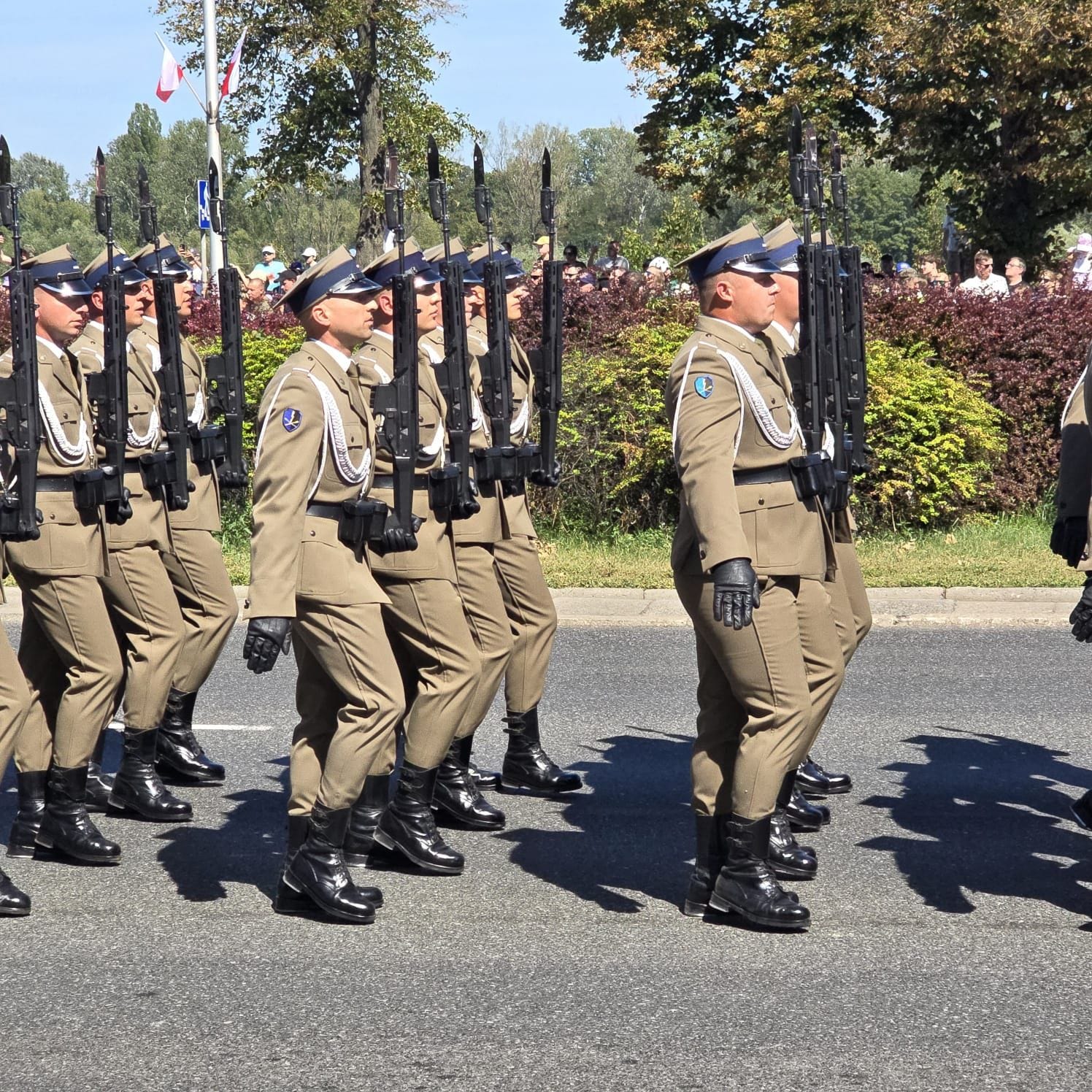
Polish Armed Forces Day parade in Warsaw (photo by the authors).
Military parade to mark Polish Armed Forces Day
On 15 August, Poland held its annual Armed Forces Day parade on Warsaw’s Wisłostrada; a naval parade took place simultaneously in Gdynia. The event also marked the 106th anniversary of the 1920 Battle of Warsaw. Officially, around 1,800 soldiers, some 300 land vehicles, more than 60 aircraft, helicopters and unmanned systems as well as over 20 ships took part. Among the equipment on display were K2, M1A2 Abrams and Leopard 2PL main battle tanks; HIMARS and Homar-K multiple-launch rocket systems (MLRS); and Patriot systems acquired under the Wisła air and missile defence programme. The flypast included F-16s, FA-50s and, for the first time, Polish F-35A aircraft. Allied nations also took part, including the USA, France, the UK, Romania and Germany. Three German Air Force aircraft took part in the flypast. The parade thus sent a clear signal of military modernisation and NATO integration on the eastern flank. At the same time, the display could not conceal persistent shortfalls in strategic enablers, notably heavy airlift and air-to-air refuelling, as well as continuing gaps in the scale, coverage and depth of Poland’s integrated ground-based air and missile defence.
Photos: Polish Ministry of National Defence on Flickr
Speeches by Nawrocki and Kosiniak-Kamysz
The speeches by President Karol Nawrocki and Defence Minister Władysław Kosiniak-Kamysz turned the parade into a stage for an open conflict over the EU’s Security Action for Europe (SAFE) defence-financing instrument. Nawrocki emphasised national sovereignty and stated that “all the keys to Poland’s security” must lie in Warsaw; Polish military standards bear the words “Bóg, Honor, Ojczyzna” (“God, Honour, Fatherland”)—not SAFE. He also called for the swift adoption of the National Security Strategy, the continuation of existing defence contracts – including the F-35 and Miecznik programmes (new frigate programme) – and better social and legal safeguards for soldiers. He portrayed Russia as an expansionist power whose aggression—from Georgia to Ukraine—also poses a direct threat to Poland and the wider European security order.
Kosiniak-Kamysz responded immediately. He turned the slogan “Polska SAFE” into a play on words and a four-part formula for Polish security: Sojusze (alliances), Armia (the armed forces), Fabryki (factories), and Europa (Europe). In his view, none of these pillars was for sale or could be replaced. Poland, he argued, was not a subcontractor within NATO or the EU, but a leader.
His central point was industrial: 89 per cent of Poland’s planned SAFE-financed expenditure would benefit domestic factories. Security bought abroad, he argued, lasts only as long as somebody is willing to sell it; security produced at home does not. On strategy and contracts, he called for continuity rather than confrontation.
About the Defence Minister’s speech
Poland launches its first Miecznik-class frigate
On 13 August, the future ORP Wicher was launched in Gdynia, following its christening ceremony on 12 August. The frigate was rolled out of the shipyard hall on special transporters and launched from a semi-submersible barge. Wicher is the first of three Miecznik-class frigates; the follow-on ships, Burza and Huragan, are scheduled to be delivered by the end of 2031.
The attention the event received in the Polish media says more about its political significance than about the ship’s technical status. The joint appearance of President Nawrocki and Prime Minister Tusk was politically notable, given the increasingly confrontational relationship between the presidential office and the governing coalition. The navy is one of the few areas in which both sides can present a united front without losing face.
The event was also significant from an industrial-policy perspective. Construction is taking place in Gdynia, a city with a long shipbuilding tradition and an equally long history of industrial decline. For the government and the state-owned defence group PGZ, the programme is intended to demonstrate that Poland’s shipbuilding industry can deliver complex naval platforms through domestic construction combined with foreign technology transfer and international industrial cooperation.
Finally, the programme also has a British dimension. The design is provided by Babcock, the three-ship contract is valued at approximately €3.5 billion, and the United Kingdom was conspicuously represented by Lord Coaker, UK Minister of State for Defence. For both sides, the programme underlines closer bilateral defence-industrial and security ties within the broader NATO framework.
https://www.gov.pl/web/obrona-narodowa/miecznik-dla-marynarki-wojennej-rp
https://pgzsw.com.pl/en/news/wicher-launch/
Majority of Poles open to even higher defence spending
A narrow majority of Poles is open to higher defence spending, according to an SW Research poll commissioned by Dziennik Gazeta Prawna.
17.5 per cent would support the expansion of the armed forces even if it meant cutting other budget items. A further 33.2 per cent would only agree to higher spending if the budgetary situation allowed it. Women and younger respondents were particularly receptive to additional defence spending, while women were also more likely to stress the need for fiscal responsibility.
At the moment Poland’s planned defence effort for 2026 is estimated at around €46.5 billion, or roughly 4.8 per cent of GDP, depending on whether expenditure financed through the Armed Forces Support Fund is included.
Debate on Poland’s air defence
On 15 August, Brigadier General Michał Marciniak, the Ministry of National Defence’s representative for integrated air and missile defence, said in a Polsat News interview that Poland did not maintain permanently deployed missile-defence coverage around its major cities. He argued that the planned integrated air and missile defence architecture would not reach its intended maturity until the 2030–35 period, owing to shortages in launchers and interceptors. After former Defence Minister Mariusz Błaszczak (PiS) demanded information regarding the protection of the capital, the Ministry clarified on 19 August that air defence does not rely on permanently stationed batteries around every major city, but is deployed on a case-by-case basis according to defence priorities. There is little new in the underlying procurement picture. Poland currently operates two Patriot batteries under Phase I of the Wisła programme, while a further six batteries have been ordered under Phase II, with deliveries scheduled for 2026–29. What was new was the unusually frank public explanation of the timetable and of the gap between current capabilities and the intended target architecture. Both sides rely on broadly the same procurement status, but draw opposing conclusions about political responsibility.
Numbers That Count
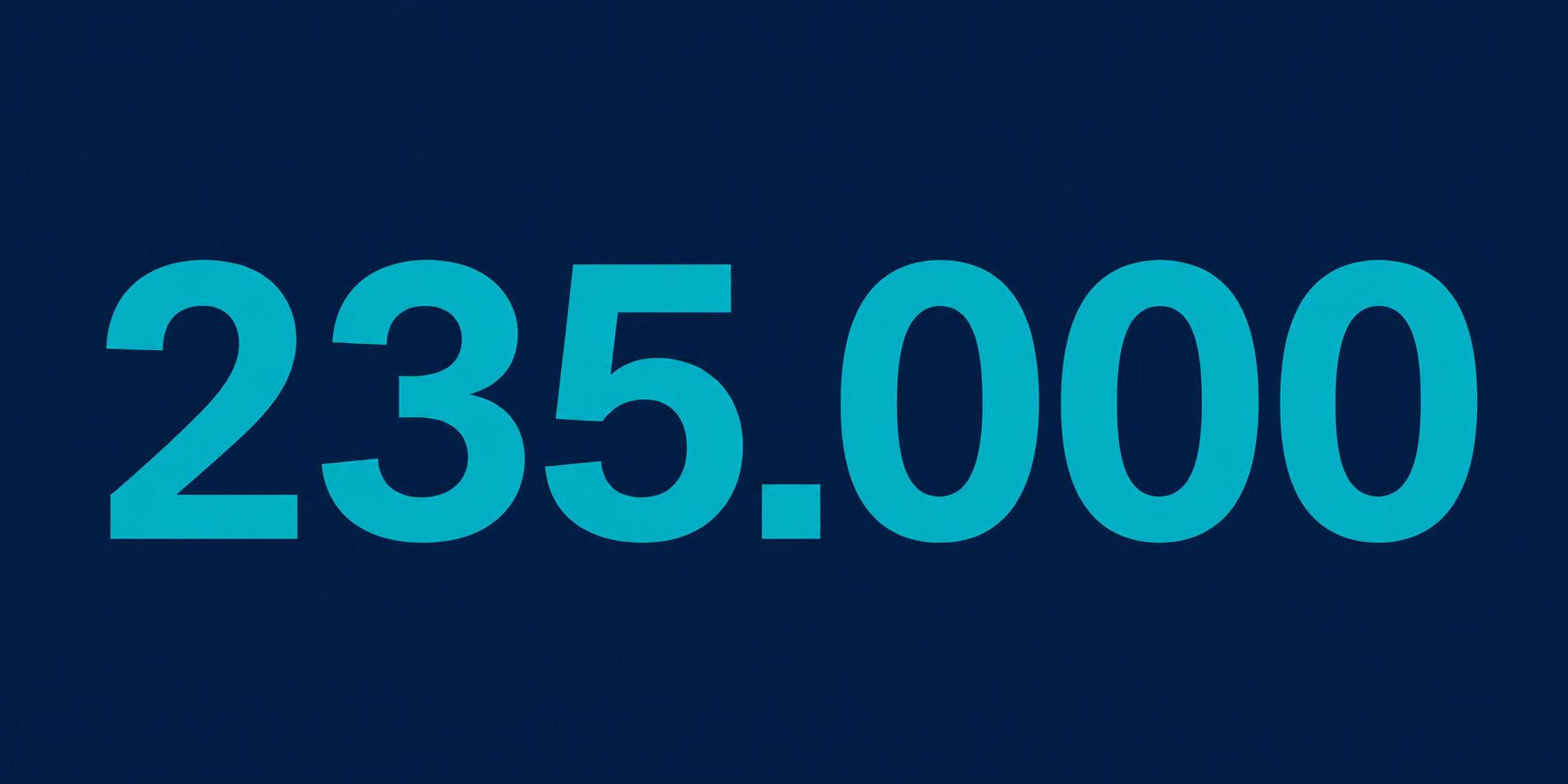
Poland has summoned this many people to appear before the military qualification boards this year – the largest intake in over a decade. This is not a call-up: compulsory military service has been suspended since 2009; military qualification is an administrative procedure involving a medical examination, the assignment of a fitness category and registration in the national defence register. Once the assessment and registration process is complete, participants are not automatically assigned to military service. This is precisely where the difference with Germany lies. Both countries suspended compulsory military service during the same period – in 2009 in Poland, and in 2011 in Germany. However, Poland suspended the service itself but retained the registration process: the ‘kwalifikacja wojskowa’ replaced the previous conscription system and has continued every year since then. Germany, by contrast, also dismantled much of the administrative and medical-assessment infrastructure needed to identify and classify potential conscripts, and would have to rebuild it before any large-scale call-up could be implemented. It is therefore particularly noteworthy who was summoned this time: alongside 19-year-old men, the 2026 procedure also covered women with specified qualifications useful for national defence—particularly in medical and selected technical fields—as well as men up to the age of 60 whose military status remained unresolved. Poland is not, therefore, preparing to reintroduce compulsory military service, but is using a system that it never abolished to identify the people and skills at its disposal in the event of a crisis or mobilisation.
The Line That Stuck

“The year 1920 and that great victory mean that all the keys to Poland’s security must lie in Warsaw. We must not lock our security in a safe whose keys are held in other European capitals—even friendly and important ones.”
Karol Nawrocki, President of Poland, referring to the EU’s Security Action for Europe (SAFE) defence-financing initiative.
“It is an attempt to drive a wedge between Poland and its closest neighbours and allies. You know these forces, these political parties, these politicians who want to convince Poland and the Polish people that our main problem is Europe, that Ukraine is our enemy, that the European Union is unnecessary, and that Germany is our greatest enemy. Somehow they forget about Russia, about our neighbour – a dangerous neighbour – which is waging war just beyond our borders, and sometimes that war even spills over onto our territory. We cannot allow treachery, stupidity and shady dealings to weaken our defence and our security.”
Donald Tusk, Prime Minister of Poland
Events & Insights

Warsaw Security Forum
From 12 to 13 October 2026, the Warsaw Security Forum (WSF) will take place in Warsaw, one of Europe’s leading platforms for high-level dialogue on transatlantic security. Organised by the Casimir Pulaski Foundation, the 13th edition is expected to bring together more than 2,500 delegates from over 90 countries, including heads of state and government, ministers, military commanders, policymakers, experts and industry representatives. Norway will serve as the Partner Nation. Norway’s participation will bring the Scandinavian total-defence model prominently into the discussion, particularly as Norway has designated 2026 its “Total Defence Year” (Totalforsvarsåret). Panels will span conventional military threats, support for Ukraine, hybrid threats, cyberattacks and disinformation, making the Forum a key venue for coordinating deterrence on NATO’s eastern flank. WSF is invitation-only, but the conference is streamed live online for broader public access.

Poland’s Role in Defending NATO’s Eastern Border
The article provides a useful update on the development of East Shield, Poland’s large-scale fortification and military-mobility programme along its eastern frontier: 60 kilometres had been secured by the end of 2025, with a further 200 kilometres planned for 2026 and a total budget of PLN 10 billion. It is particularly valuable in tracing how the national construction programme is being linked to European military-mobility infrastructure, 26 projects registered under SAFE, and the emerging Baltic Defence Line. The article also notes the participation of German military engineers in work along Poland’s eastern border since April—a detail that deserves greater attention in debates on practical allied support for the eastern flank.
FPRI, “East Shield: Poland’s Role in Defending NATO’s Eastern Border” (July 2026).
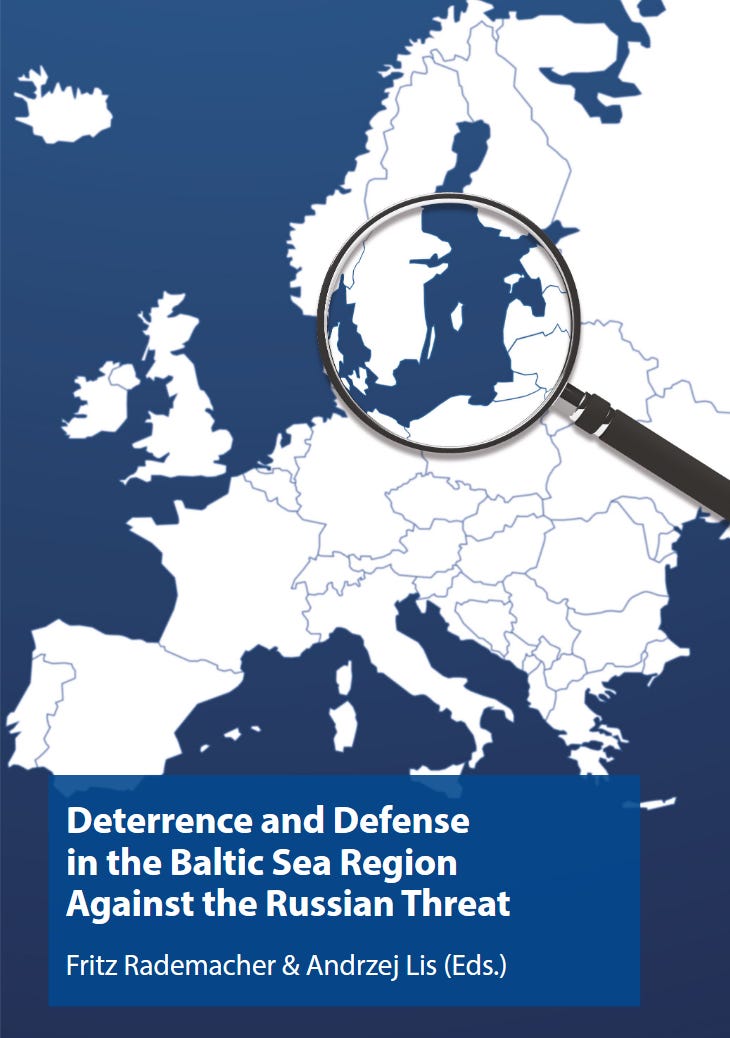
Baltic Sea Security in the Face of the Russian Threat
The security situation in the Baltic Sea region has changed fundamentally. Russia’s war against Ukraine, hybrid threats and NATO’s northward expansion through the accession of Finland and Sweden are placing new demands on deterrence and defence. The anthology “Deterrence and Defence in the Baltic Sea Region Against the Russian Threat”, edited by Fritz Rademacher and Andrzej Lis, examines these developments from various perspectives. The articles cover, amongst other things, Russian sabotage, Poland’s defence capabilities, the resilience of the Baltic states and the role of regional cooperation. It is a highly recommended analysis of the security challenges facing NATO’s eastern flank.

This blog is hosted by the Konrad Adenauer Stiftung’s Office in Poland.
Follow the Konrad Adenauer Stiftung Poland on LinkedIn as well!
Editors
Dr. Daniel Lemmen
Geopolitical analyst specializing in Poland and security policy. Working for the Konrad-Adenauer-Stiftung in Warsaw, with a focus on strategic developments, Polish defence policy, and the German-Polish security debate.
Christian Nerzejewski M.A.
Officer of the Reserve, German Armed Forces, First Lieutenant (OF-1), analyst and military expert specializing in the Polish armed forces. His work focuses on operational readiness, procurement, and military structures.
Parts of this edition were translated with the assistance of AI.